Bioavailability
Bioavailability is the share of a nutrient that your body actually absorbs and uses. It depends on the form of the nutrient, the food around it and your own gut.
Every nutrient, and every form of it, behaves differently.
Labels and ads may say “high bioavailability”. Ask: compared with what?
What it means
Eating a nutrient is not the same as absorbing it. Your body might take in most of one vitamin and only a small fraction of a mineral from the same meal.
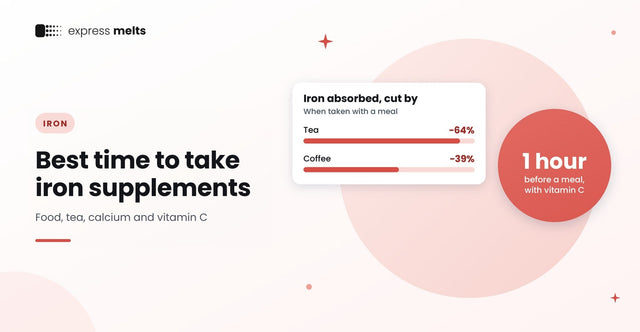
Heme iron from meat absorbs far better than plant iron. Fat-soluble vitamins need fat. Tea, calcium and phytates can lower absorption; vitamin C and fermentation can raise it.
Delivery formats, from capsules to mouth-dissolving strips, can change how a nutrient enters the body. The size of the benefit depends on the nutrient and the evidence for that product.
Pairings that help
Smart pairings raise absorption at home.
- LLemon on dalVitamin C helps iron
- GGhee on greensFat helps vitamins A, E, K
- PPepper with haldiHelps curcumin
- SSprouted moongFrees zinc, iron
- CCooked tomatoFrees lycopene
- TTea after an hourSpares iron
Kitchen tip: Small habits change how much you absorb from the same food.
Reading the label
Labels hint at bioavailability through the form.
A cheaper form with lower absorption can still work at the right dose.
Tests that show absorption
Blood tests show what your body actually absorbed.
Serum Ferritin
Shows iron reserves.
25-OH Vitamin D
Shows whether a supplement raised your level.
A rise after treatment is the best proof of absorption.
Trusting “100% absorbed” claims without evidence
Absorption depends on the nutrient, the dose and the person.
When it matters
One thing to do today
Simple pairings raise bioavailability at home.
Questions people ask
Why does bioavailability matter?
Two products with the same label amount can deliver different amounts to your blood.
Which nutrients have low bioavailability?
Plant iron, zinc from phytate-rich foods, and curcumin are well-known examples.
Can cooking change bioavailability?
Yes. Cooking frees lycopene and beta-carotene, but destroys some vitamin C and folate.