Lipid Profile
A lipid profile measures the fats in your blood: LDL and HDL cholesterol and triglycerides. It helps your doctor judge your risk of heart attack and stroke.
Fasting is often not needed now; check with your lab.
Printed as “Lipid Profile”, with LDL, HDL, triglycerides and total cholesterol.
What it measures
LDL carries cholesterol into artery walls, where it can build up into plaque; that is why it is called bad cholesterol. HDL carries cholesterol back to the liver. Triglycerides are fats that rise with sugar, refined carbs and alcohol.
Your doctor reads these numbers alongside your age, blood pressure, diabetes and smoking to judge risk. People at higher risk need much lower LDL targets.
Indians tend to develop heart disease earlier than many other populations, so Indian guidelines often set stricter targets.
On an Indian plate
These foods help your lipid profile.
- OOatsSoluble fibre
- IIsabgolSoluble fibre
- NNutsAlmonds, walnuts
- RRice bran oilPlant sterols
- FFishOmega-3
- RRajmaFibre
Kitchen tip: Swap fried snacks for roasted chana or nuts.
Reading a food label
Food labels show the fats that matter.
Vanaspati and many bakery snacks carry trans fats.
Reading your lab report
These are the values on a lipid profile.
LDL Cholesterol
The main target for treatment.
HDL Cholesterol
Higher is generally better.
Cholesterol: 1 mg/dL = 0.0259 mmol/L. For triglycerides the factor is 0.0113.
Non-HDL cholesterol, total minus HDL, is another useful number.
Stopping cholesterol medicine once numbers look good
Good numbers on a statin usually mean the medicine is working, not that you no longer need it.
Before the test
One thing to do today
Lifestyle changes show up on your next report.
Questions people ask
Do I need to fast for a lipid profile?
Often not, but some labs and doctors still prefer fasting, especially if triglycerides were high before.
What is a good LDL level?
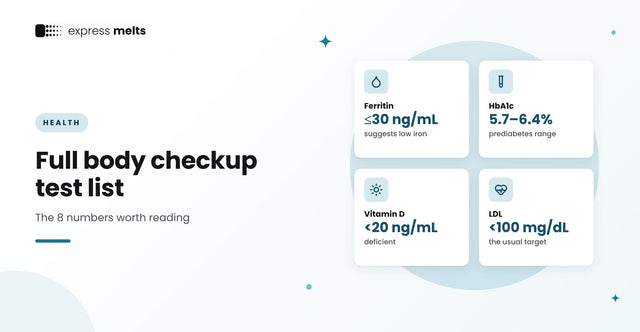
It depends on your risk. Many healthy adults aim below 100 mg/dL; people with heart disease or diabetes often need much lower.
How often should I check?
Every few years from your 20s or 30s if healthy, more often if you have risk factors or take medicine.