Shatavari
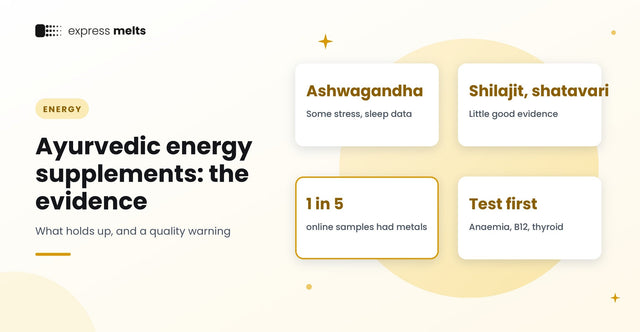
Shatavari is an Ayurvedic herb from a wild asparagus root, traditionally used as a tonic for women, including for breast milk. Modern evidence is limited and mixed.
It comes from the plant’s root.
No test.
What shatavari does
Shatavari has a central place in Ayurveda as a rejuvenating tonic, especially for women at different life stages. It is often taken as a powder in milk.
Its best-known use is to increase breast milk. A few small studies have looked at this, with mixed results, and quality varies widely.
There is not enough research to recommend it for any specific condition, and its safety in pregnancy is not well studied.
How people take it
Shatavari is usually taken as powder.
- WWith milkTraditional
- CChurnaRoot powder
- CCapsulesMeasured dose
- GGranulesSweetened forms
Kitchen tip: Sweetened granules can carry a lot of sugar.
Reading the label
Shatavari products list root powder or extract.
Quality varies; choose brands with an FSSAI licence and tested batches.
Is there a test?
Shatavari is not tested.
Hormone tests
For menopause or cycle concerns.
Allergy check
Shatavari is a close relative.
Feeding concerns are best checked by a lactation consultant.
Using shatavari instead of lactation support
Low milk supply has many causes. Relying on a herb can delay help that works.
If you take it
One thing to do today
Herbs are a supplement to care, not a substitute.
Questions people ask
Does shatavari increase breast milk?
Small studies are mixed. Lactation support and frequent feeding help most.
Is shatavari safe?
It is generally well tolerated, but safety in pregnancy is not well studied. People allergic to asparagus should avoid it.
Can men take shatavari?
It is traditionally used by women, but there is no known reason men cannot. Evidence for any benefit is limited.