Valerian
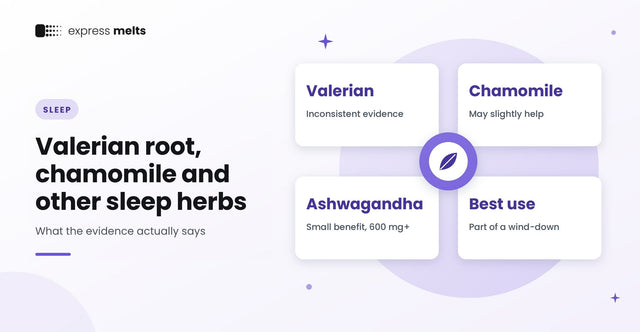
Valerian is a root used for sleep and restlessness for centuries. Studies are mixed: some people fall asleep a little faster, while others notice little change.
It comes from the plant’s root.
No test.
What valerian does
Valerian root contains compounds that may act on GABA, the brain’s main calming messenger. It has been used as a sleep aid in Europe since ancient Greece, and a related species, tagar, is used in Ayurveda.
Research results are mixed. Some studies show slightly faster sleep onset and better sleep quality; others show no difference from a placebo.
It may make you drowsy the next morning, and should not be combined with alcohol or sleeping pills.
How people take it
Valerian is taken as tea or capsules.
- RRoot teaStrong smell
- CCapsulesMost common
- SSleep blendsWith chamomile
- SStripsIn some sleep products
Kitchen tip: The smell is strong; capsules or blends are easier.
Reading the label
Valerian products list root extract.
Combination products make it hard to know what is working.
Is there a test?
Valerian is not tested.
Liver Function Test
Checks the liver, which can be strained by some herbal extracts.
Sleep study
For persistent insomnia or snoring.
Insomnia lasting over a month deserves a doctor’s visit.
Mixing valerian with alcohol or sleeping pills
Valerian can add to the sedating effect of alcohol and sleep medicines.
If you take it
One thing to do today
Herbs help most alongside a steady routine.
Questions people ask
Does valerian work for insomnia?
Some people fall asleep a little faster, but studies are mixed. Long-term insomnia needs a doctor.
Is valerian safe?
For most adults, short-term use is safe. It is not advised in pregnancy or for young children.
Why does valerian smell bad?
Its root contains isovaleric acid, which gives a strong, earthy smell.